





Orbit Cards is a collection of modern Home Assistant dashboard cards and badges. Every component shares the same visual language and editor experience, with flexible layouts, dynamic colours, custom icons, templates, and configurable interactions.
Install Orbit Cards directly from the default HACS repository, then configure its cards and badges from Home Assistant's dashboard editor.
Documentation · Installation guide · Examples · Screenshots
|
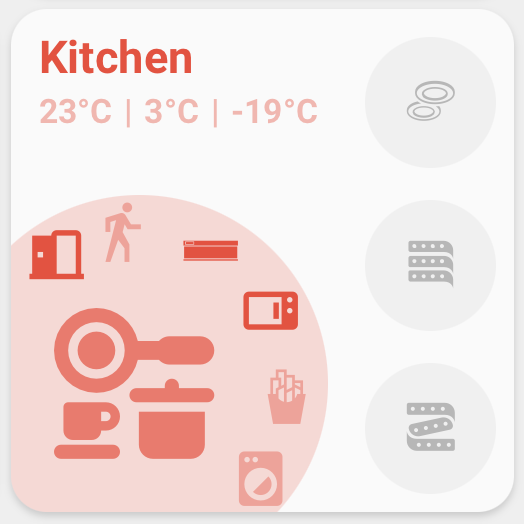
An area overview with status text, a main entity, side buttons, curved quick actions, and navigation. |
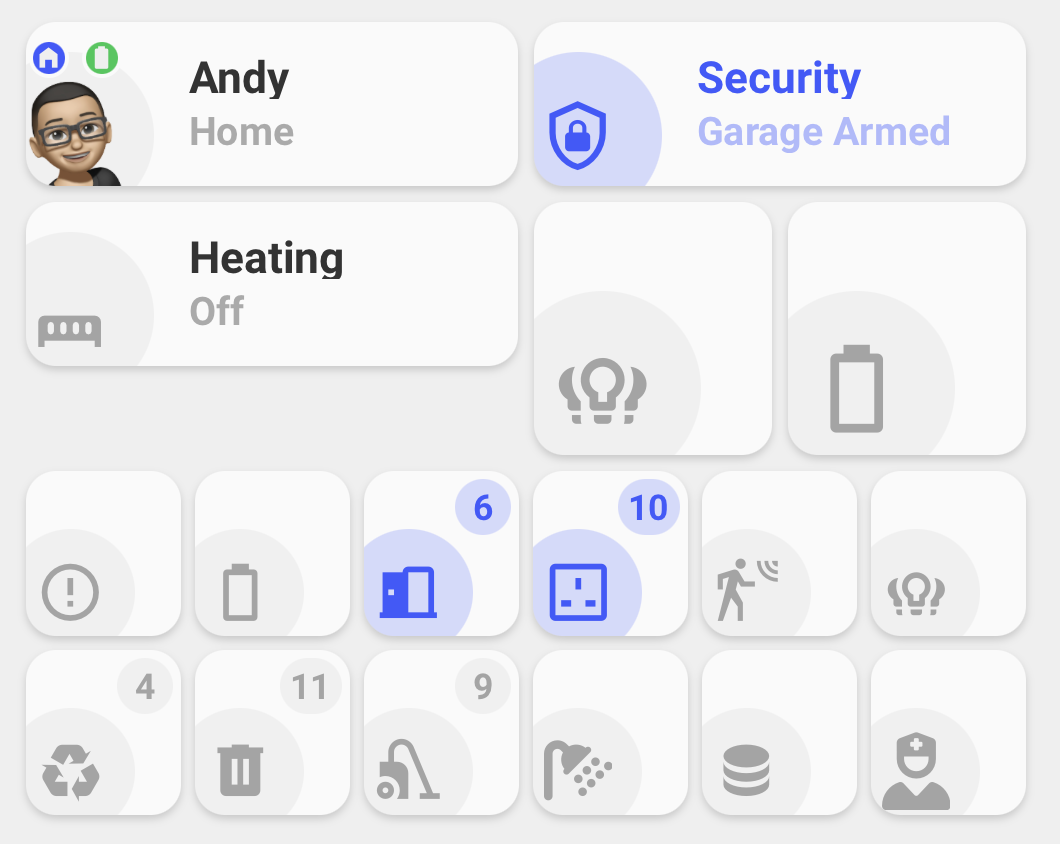
Visual entity summaries in Standard, Person, Icon only, and compact grouped Icon only modes. |
|
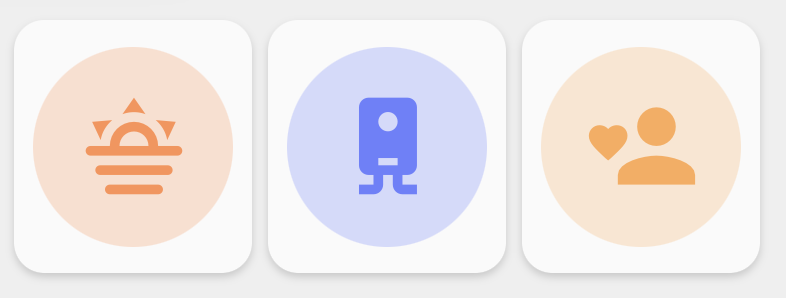
Compact controls for scenes, scripts, automations, buttons, cameras, and grouped shortcuts. |
Wrap 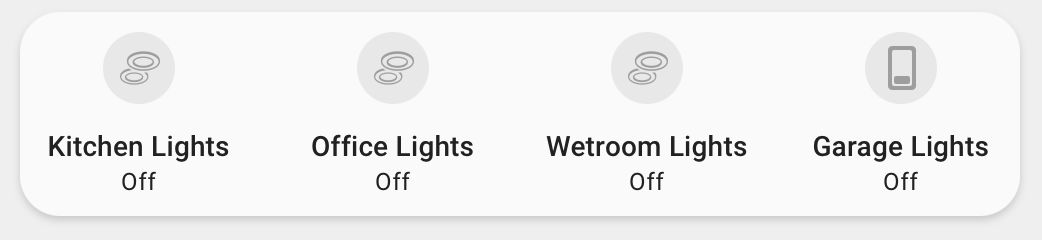
Tabs 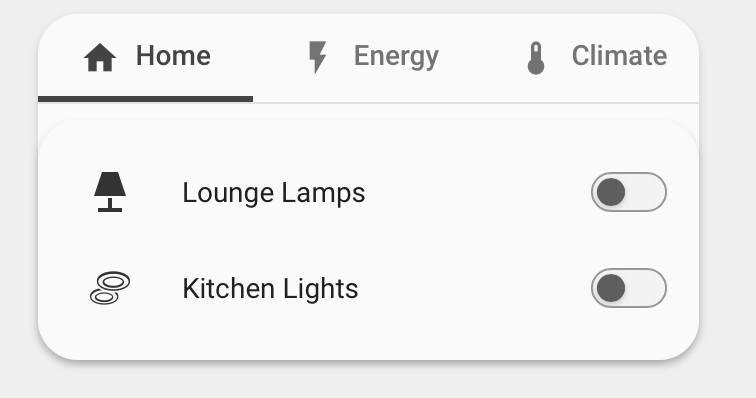
A generic container that wraps Lovelace cards into rows, switches between them with tabs, or places compact cards over a main card. |
|
Badge 
Heading badge 
Active entities 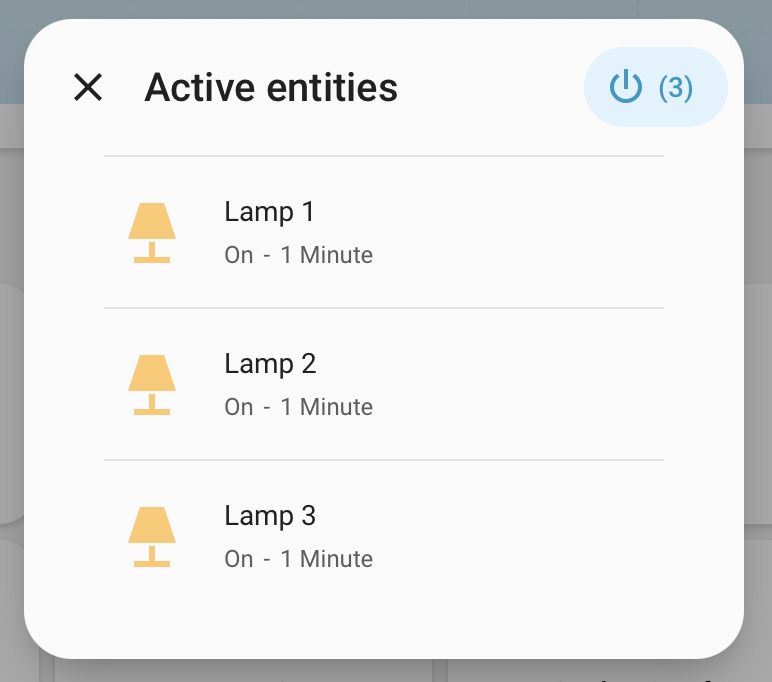
Flexible entity, area-count, and template-driven status indicators for Home Assistant badge rows and card layouts. |
- Built-in visual editors with grouped, Home Assistant-style controls.
- Shared colour handling with theme colours, named colours, CSS colour values, preview swatches, and light-derived colours where supported.
- Material Design Icons, bundled
orbit:icons, local SVG/image icons, and configurable active and inactive icon states. - Tap, hold, and double-tap interactions with more-info, navigation, service calls, popups, and optional Browser Mod and Bubble Card integrations.
- Native Home Assistant Jinja rendering and live entity updates for components that support templates.
- Compact grouped layouts for Status and Action cards, plus Deck Card Wrap, Tabs, and Overlay layouts for any Lovelace card.
- Deck Card child visibility, automatic layout reflow, transparent backgrounds, and per-item padding controls.
- Unavailable-entity indicators across Area, Status, and Action cards.
- Translations for English, British English, German, Spanish, French, Italian, Dutch, and Brazilian Portuguese.
Full configuration references and YAML examples are available in the Wiki.
- Open HACS in Home Assistant.
- Search for
Orbit Cards. - Select
Orbit Cards, then chooseDownload. - Refresh Home Assistant when the download is complete.
- Add an Orbit card or badge from the appropriate dashboard picker.
-
Download
orbit-cards.jsfrom the latest release. -
Copy it to:
/config/www/orbit-cards.js -
Optional: to use bundled
orbit:icons, copymanifest.jsonand the bundled.svgfiles besideorbit-cards.jsin:/config/www -
In Home Assistant, go to
Settings→Dashboards→Resources. -
Add this resource:
/local/orbit-cards.js -
Set the resource type to
JavaScript module. -
Refresh Home Assistant.
See the installation guide for more information.
After updating, refresh the browser or reload Home Assistant frontend resources. Some browsers and Home Assistant apps cache frontend modules aggressively, so a hard refresh may be needed before changes appear.
- Home Assistant Lovelace dashboards running Home Assistant 2025.6.0 or newer.
- Available from the default HACS repository, with manual resource installation as a fallback.
- Browser Mod is required only for Browser Mod popup actions.
- Bubble Card is required only for Bubble Card hash popups.
custom:orbit-room-cardremains registered as a legacy alias forcustom:orbit-area-card.room_nameremains supported as a legacy alias forarea_name.- Legacy Area Card configs are migrated when the editor opens:
custom:orbit-room-cardis rewritten tocustom:orbit-area-card, androom_nameis rewritten toarea_name.
See the migration guide for legacy configuration details.
- Read the Wiki for configuration guides and examples.
- Check Troubleshooting for common setup and caching problems.
- Use GitHub Issues for bugs and feature requests.
- See GitHub Releases for downloads and release notes.
Created by AndyBlac and released under the MIT License.